
Counterfeit Brand Cases During the Summer Season: Legal Grounds, Official Statistics, and Proactive Measures

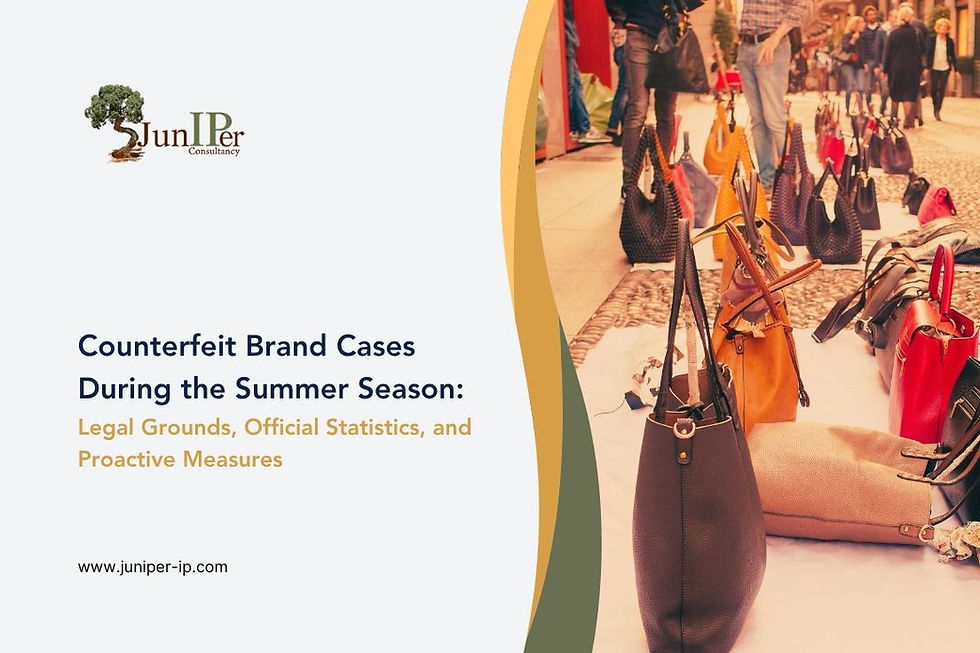
The summer season marks a period of increased consumer interest and commercial activity across many sectors. This surge in activity leads to heightened risks on both the supply and demand sides for counterfeit goods. Notably, there is a significant rise in counterfeit brand cases in industries with seasonal peaks such as fashion, cosmetics, textiles, accessories, toys, and holiday-related products.
According to the 2023 report* published by the Directorate-General for Taxation and Customs Union (DG TAXUD) of the European Commission and the European Union Intellectual Property Office (EUIPO), which focuses on the protection of intellectual property rights at customs and in the internal market:
Counterfeit Goods Seized at Customs: In 2023, the number of counterfeit products seized at EU borders decreased by 27%, with the total number falling from 24 million to 17.5 million—marking the lowest level in the past decade. Additionally, the estimated value of seized items dropped by 14%, reaching €811 million.
Country of Origin: China was identified as the source of 56% of all counterfeit goods seized in the EU, followed by Hong Kong at 9% and Turkey at 8%. Among counterfeit products originating from Turkey, ready-made clothing stood out as the most frequently seized category.
Transport Modes: Postal and express courier services were cited as the most common methods for transporting counterfeit goods, while maritime shipping held the largest share in terms of volume.
Customs Procedure Types: 77% of cases were detected during import procedures, 19% during external transit, and 1% during re-export operations.
Types of Infringement: 84% of seized counterfeit goods infringed EU trademarks, 7% infringed international trademarks, 6% national trademarks, and over 3% violated Community designs.
Cooperation and Information Sharing: The report emphasized the importance of collaboration between customs authorities and rights holders. In 2023, a total of 3,497 "Action for Action" applications were submitted, and customs authorities were noted to have the authority to initiate ex officio enforcement actions against infringements.
In the aforementioned report, the following findings were highlighted regarding Turkey:
Turkey ranks third, after China and Hong Kong, as the country of origin for counterfeit goods entering the EU;
Counterfeit products originating from Turkey account for 8% of all counterfeit goods seized at EU borders, in terms of quantity;
The majority of counterfeit goods coming from Turkey fall under the clothing category;
In terms of estimated value, Turkey holds the third-largest share—exceeding 5%—following China and Hong Kong.
In an environment where the counterfeit market is this extensive and the issue carries significant importance, short-term consumer habits and seasonal sales dynamics during the summer months create favorable conditions for counterfeit products to spread more easily in the marketplace.
Key Reasons Behind the Rise of Counterfeit Brands During the Summer Season
Increase in Tourism Volume The surge in tourist numbers across the country during the summer—particularly in coastal cities and border regions—creates challenges in market surveillance. These areas often provide a breeding ground for counterfeit products to be introduced into the market via street vendors and temporary stalls.
Consumer Behavior Shopping habits during the summer tend to be impulsive and unplanned. Consumers focus more on appearance, price, and immediate needs rather than product quality or origin. This shift leads to reduced sensitivity toward authenticity, making it easier for counterfeit products to be sold.
Proliferation of Online Sales Channels The growing prevalence of e-commerce and direct sales through social media has enabled counterfeit goods to enter the market with less oversight. Consumers are often misled by fake accounts or deceptive profiles posing as “authorized resellers.”
Seasonal Product Demand and Rapid Production Chains Sudden spikes in demand for seasonal products such as beachwear, sunglasses, bags, and toys trigger opportunistic producers. These actors can swiftly flood the market with low-quality imitations bearing unauthorized logos of popular brands.
Trademark Monitoring: A Proactive Layer of Security in Intellectual Property Protection
Trademark monitoring is a systematic and technical surveillance activity carried out to ensure that a trademark is not only registered but also actively protected. One of the core principles of intellectual property law is the obligation of the rights holder to actively defend their trademark. Therefore, trademark monitoring is regarded as a “watchdog duty” that begins after registration.
What Is the Purpose of Trademark Monitoring?
Early detection of identical or similar trademark applications filed by third parties
Monitoring the direct or indirect use of the trademark by individuals or companies seeking unfair advantage
Identifying activities that could damage the reputation of the registered trademark in the marketplace
Enabling the trademark owner to initiate opposition or cancellation proceedings in a timely manner
These efforts not only provide legal protection but also help safeguard the brand’s economic value and reputation. Without trademark monitoring, undetected infringements can lead to commercial and reputational losses that may be difficult or even impossible to reverse.
Legal Basis and International Practice
The Industrial Property Law No. 6769 grants the trademark owner the right to "oppose" and "prevent usage." However, the exercise of these rights depends on the trademark owner’s ability to notice developments related to their trademark in a timely manner. The European Union Intellectual Property Office (EUIPO), the World Intellectual Property Organization (WIPO), and many national offices regard trademark monitoring services as a mandatory practice for trademark owners with high awareness.
Therefore, trademark owners should not only rely on the registration process but also regularly monitor the presence of their trademarks in the market. With the support of intellectual property experts, exercising their rights promptly becomes an integral part of long-term protection strategies. Correct steps taken in the field of intellectual property not only prevent infringements but also secure the trademark's future investment and growth potential.
Trademark Monitoring Strategies for the Summer Season
The increase in trademark infringements during the summer requires the customization of monitoring strategies for this period. Dynamic and intensified monitoring systems should be established, especially in the following areas:
Small-scale producers and street vendors in tourist areas Trademark infringements are commonly seen in coastal cities, festivals, and fairgrounds, which attract high numbers of tourists. Covert inspections and collaborations are effective in these areas.
Seasonal marketplaces and airports In areas with seasonal trade, counterfeit products can be sold through temporary stalls. Supplier tracking and physical inspections should be supported.
Online marketplaces (Amazon, Trendyol, Aliexpress, etc.) Campaign periods increase during the summer season. Fake versions of popular products can quickly appear on these platforms. Monitoring should be done through automated search systems, and seller reporting mechanisms should be actively used to address trademark violations.
Sales accounts on social media platforms On visual-centric platforms such as Instagram and TikTok, the marketing of counterfeit branded products intensifies. Hashtag-based monitoring, tracking counterfeit authorized reseller profiles, and platform collaborations become critical.
Customs Enforcement Measures: A Security Shield at the Border
Customs enforcement measures are designed to detect and prevent counterfeit goods before they enter the country. During the summer months, increased cross-border traffic makes it critical for these mechanisms to operate proactively. Within the scope of practices applicable in both Turkey and the European Union:
Trademark owners can register their trademarks with the customs information system to request official protection against the entry of high-risk goods.
Suspicious products are intercepted by customs officers, and the trademark owner is notified.
If no legal action is initiated within 10 working days, the goods may be released—making a swift response process essential.
According to data from the Ministry of Trade for the January–May 2025 period**, a total of TRY 26.45 billion worth of smuggled goods and narcotics were seized through enforcement operations. In May 2025 alone, goods valued at approximately TRY 9.9 billion were confiscated—a year-over-year increase of nearly 140%—ranking among the highest single-month seizure figures ever recorded.
These figures highlight the intensity and effectiveness of customs inspections and underscore their critical role in preventing counterfeit products from entering the market. Given the increased commercial activity during the summer season, it is essential for brand owners to keep their customs declarations up to date and support active monitoring mechanisms—key factors that directly impact the success of enforcement efforts.
Strategic Recommendations
Intellectual Property Consulting and Integrated Service Procurement Individual measures alone may be insufficient in combating counterfeit products. Working with professionals specialized in intellectual property consulting enables an integrated approach covering all stages—from trademark registration and monitoring to legal process management and customs coordination. This creates proactive and rapid response mechanisms against infringement. If you are not currently receiving professional consulting, it is strongly recommended to adopt integrated services to prepare for the increased risks of the summer season.
Develop Seasonal Protection Plans Go beyond general annual strategies by creating detailed protection plans for high-risk periods such as the summer months, when both demand and risk increase. These plans should include risk analysis, resource allocation, inspection schedules, and infringement detection procedures. By considering the dynamics of seasonal demand, resources can be utilized more flexibly and effectively.
Integration of Customs Registration and Trademark Monitoring Systems One of the critical aspects of trademark protection is the detection and interception of counterfeit or smuggled goods during import and export processes. Integrating customs records with trademark monitoring systems is essential for early detection, rapid response, and process tracking. High levels of data sharing and coordination help prevent infringement cases before they escalate.
Proactive Monitoring on Social Media and E-Commerce Platforms To protect your brand in the digital space, real-time monitoring of fake accounts, misleading listings, and pirated content is necessary. Automated content scanning technologies and AI-powered visual and text analysis tools should be utilized. Predefined and efficiently implemented complaint and takedown procedures are crucial. Establishing regular communication channels with platforms accelerates the identification and removal of infringing content.
Physical and Covert Inspections with Authorized Audit Teams In coastal and tourist regions, counterfeit goods often proliferate at physical sales points. Therefore, regular and covert inspections should be conducted by experienced and authorized audit teams. In high-risk areas such as marketplaces, fairs, and temporary sales stands, the authenticity of products should be verified using technical devices and documentation. These inspections are also critical for promptly initiating legal and administrative proceedings after detection.
International Brand Protection and Risk Management Protecting your brand in export markets requires the active use of global registration and monitoring systems. Collaborating with local intellectual property offices, leveraging regional brand monitoring services, and securing international legal support can help minimize overseas risks. Coordinated protection mechanisms should be established at border crossings, ports, and e-commerce platforms in particular.
An Integrated Brand Protection Approach Is Essential for a Safe Summer Season Summer represents both great opportunities and significant risks for brand value. The rise of counterfeit products during this period is confirmed not only by field observations but also by publicly available data from the Ministry of Trade. Therefore, establishing seasonal brand protection plans and implementing active, integrated defense mechanisms across customs, digital platforms, and the field is no longer optional—it is essential.



Comments